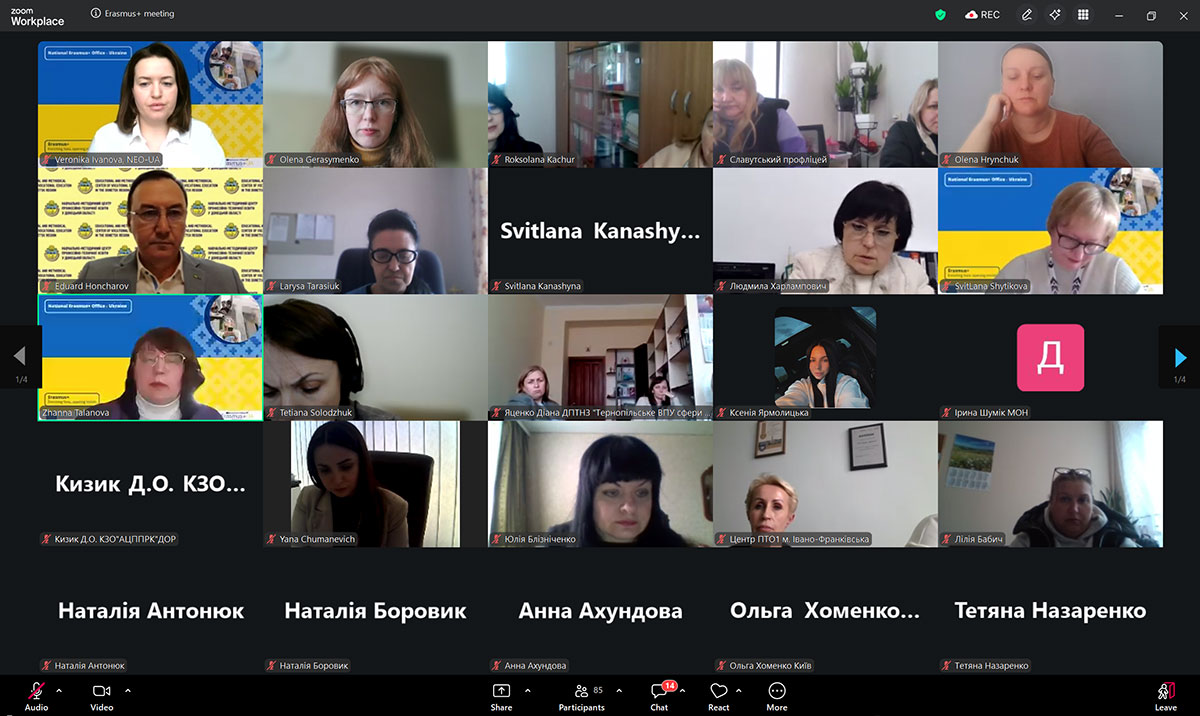
In Erasmus+ Capacity Building in Vocational Education and Training (CBVET), strong project management is what turns ambition into lasting impact. For partners operating under exceptional circumstances, it also becomes a test of resilience. This is the context in which InnovaTex’s Ukrainian partner, Kyiv National University of Technologies and Design (KNUTD), recently took part in a national seminar dedicated to the practical realities of managing Erasmus+ projects in Ukraine today.
On 21 April 2026, scientists from the Faculty of Design at KNUTD joined the training seminar “Features of Erasmus+ CBVET project management in the conditions of martial law in Ukraine.” Organised by the Ministry of Education and Science of Ukraine together with the National Erasmus+ Office in Ukraine, the seminar brought together the teams of all Erasmus+ winning projects active in vocational and professional pre-higher education across the country. It offered a valuable opportunity for project coordinators to align on procedures, share experience and reinforce a common standard of delivery at a moment when clarity and coordination matter more than ever.
A delegation rooted in design and education
The KNUTD delegation reflected the breadth of expertise the university brings to InnovaTex. It included Kalyna Pashkevych, Dean of the Faculty of Design; Olena Gerasymenko and Liudmyla Melnyk, Associate Professors at the Department of Art and Fashion Design; Nataliia Chuprina, Head of the Department of Art and Fashion Design; Olga Yezhova, Professor at the Department of Graphic Design; and Nadiia Liukhan, postgraduate student and assistant at the Department of Art and Fashion Design.
Their participation is directly connected to the implementation of InnovaTex, the Erasmus+ initiative running from January 2025 to December 2027 that is transforming vocational education and training for the textile industry through digitalisation, sustainability, and smart textiles. For a project of this ambition, sound management at the national level is as important as innovation in the lab. Engaging with national authorities and peer projects ensures that every activity, from new vocational Smart Labs to joint training, is grounded in solid administrative foundations.
Institutional and operational guidance
The seminar opened with an introductory address by Iryna Shumik, Director General of the Directorate of Vocational Education at the Ministry of Education and Science of Ukraine, who outlined the modes of interaction between projects and the Ministry under the current conditions.
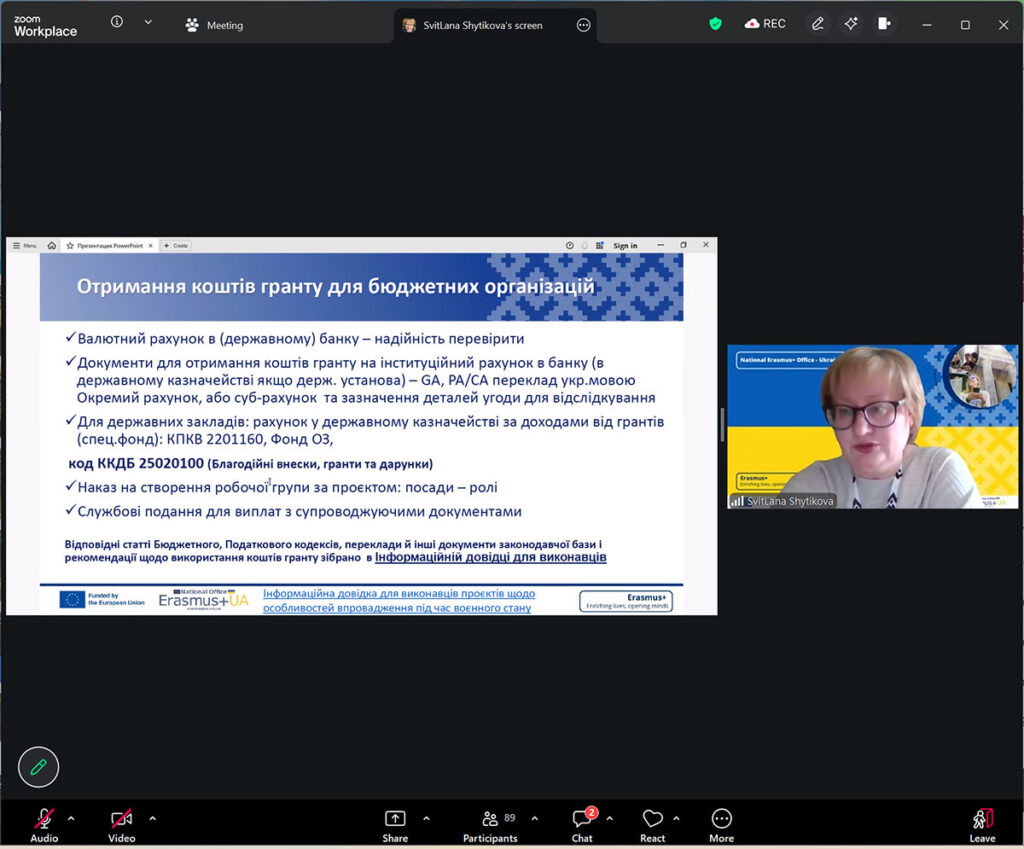
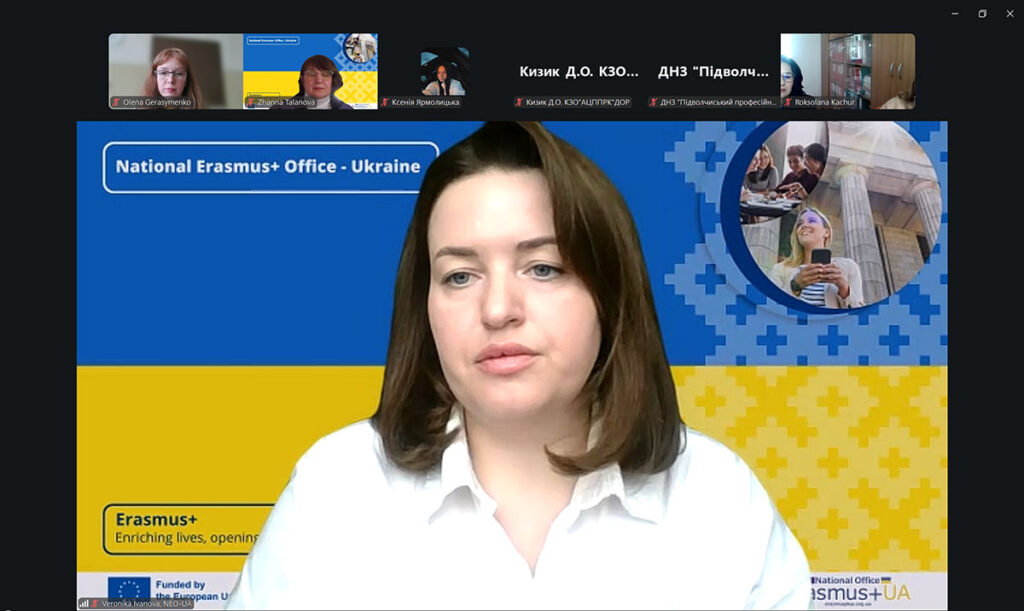
Svitlana Shytikova, Coordinator of the National Erasmus+ Office in Ukraine, presented the specifics of implementing Erasmus+ projects under martial law, outlining the operational adjustments that enable international cooperation to continue safely and effectively. Veronika Ivanova, Manager of NEO Ukraine, focused on the procedures for the state registration of projects, a key compliance step for every team working within the national framework.
[IMMAGINE 3 — Svitlana Shytikova presenta l’attuazione dei progetti in regime di legge marziale]
Taken together, these contributions gave participants a clear, shared understanding of the rules and expectations that govern Erasmus+ delivery in Ukraine. This kind of guidance reduces uncertainty, strengthens accountability, and helps consortia keep their work on track despite a demanding environment.
[IMMAGINE 1 — Veronika Ivanova, NEO Ukraine, sulle procedure di registrazione dei progetti]
Experience from cities and colleges
The programme also gave space to local and regional stakeholders, grounding the discussion in real institutional practice. Bohdan Belov, Director of the Department of Education and Humanitarian Policy of the Cherkasy City Council, presented the city’s experience in supporting international cooperation between professional and pre-higher education institutions.
Roksolana Kachur and Olga Neprila, from the Lviv Professional College of Hotel, Tourism, and Restaurant Service, shared their direct experience in managing CBVET projects in the current Ukrainian context. Their testimonies illustrated how committed institutions continue to deliver high-quality vocational education despite significant operational challenges, offering practical lessons that resonate well beyond a single project or region.
Why this matters for InnovaTex
KNUTD’s presence at this national seminar is more than a formal commitment. It reinforces InnovaTex’s dedication to the highest standards of project management, compliance, and resilience, even in particularly challenging conditions. It also confirms the strategic value of close cooperation between EU-funded projects, national authorities, and the Erasmus+ network in Ukraine.
For a consortium of eight partners across Romania, Greece, Italy, Ukraine, and Moldova, this alignment is essential. It ensures that the work carried out in each country rests on a common understanding of how to operate well together, so that the project’s shared goals can be pursued consistently and transparently from one partner to the next.
InnovaTex extends its thanks to the Ministry of Education and Science of Ukraine and the National Erasmus+ Office in Ukraine for organising the seminar, and to its Ukrainian colleagues at KNUTD for their continued dedication to the project. Their engagement is a clear sign that strong management and genuine resilience can advance hand in hand.
Stay connected with InnovaTex on our website and social channels to follow the next steps of the project as it continues to transform vocational education and training for the textile sector across Europe.